.svg)

.svg)
.svg)

When should a child first go to the dentist? The simple answer is after the first tooth appears or by the first birthday, whichever comes first.
The first visit is usually short and gentle. It checks early teeth and gives parents advice about brushing, feeding habits, and future visits.
The American Dental Association recommends a visit after the first tooth appears, but no later than the first birthday.
Schedule within about six months. If the first tooth appears at five months, aim for a visit by eleven months.
Do not wait longer just because your baby has few teeth. If the first tooth appears at ten months, visit around twelve months, not sixteen months. If no teeth are visible at age one, call the dentist for guidance.
A baby tooth can develop a cavity soon after it appears. An early visit helps catch small concerns before they cause pain or require a larger repair.
Baby teeth help children chew, speak, and hold space for adult teeth. Early preventive dentistry for children gives parents help with brushing, toothpaste, bottles, snacks, and drinks. Your child also meets the dental team before an urgent problem makes the experience harder.
A baby’s first dentist visit is brief and shaped around the child’s age and comfort.
Your child may sit on your lap while the dentist looks at the teeth, gums, jaw, and bite. The dentist checks how teeth are coming in and looks for cavities or irritation.
A light cleaning or fluoride treatment may be offered when suitable. X-rays are not automatic at every first visit.
Dr. Garcia helps parents understand brushing, toothpaste amounts, teething, feeding habits, pacifier use, and thumb sucking. He can also explain what to expect as more teeth appear.
If a cavity or damaged tooth is found, the dentist may recommend watching it, protecting it, or using restorative dentistry for children.
Parents may delay because their child has one tooth, no teeth, or has passed the first birthday. None of these situations should cause guilt or more waiting.
One tooth is enough. The visit also gives parents guidance and helps the child become familiar with the office.
Call around the first birthday and explain that no teeth are visible. Tooth timing varies, and the dentist can tell you whether to visit now or wait a little longer.
If your child is two, three, or older and has never been, schedule now. Do not wait for pain. Tell the office it is the first appointment so the team can plan a simple introduction.
Babies mainly need a calm schedule and a prepared parent. Toddlers can also practice at home.
Choose a time when your child is rested and avoid nap time. Say, “The dentist will count your teeth.” Do not mention pain, shots, or drilling.
With a toddler, practice opening wide or read a short dentist book. Tell Dr. Garcia about strong fears, sensory concerns, communication needs, or past difficult visits. This helps him guide the appointment at a pace your child can manage.
Bring insurance information, health details, questions, and a comfort item. Ask whether forms can be completed at home. You can also review the office’s pediatric dental services before the visit.
Use the first dentist appointment for your child to get specific answers. Ask:
Write down the answers for a consistent home routine.
Do not wait for a planned visit if your child has pain, swelling, ongoing bleeding, a broken tooth, or a mouth injury.
Call sooner for white, brown, or dark tooth spots, trouble chewing, sudden refusal to eat, or a tooth that changes color after a fall. Repeated waking while pointing to the mouth may also signal a problem that needs attention.
The dentist will recommend a return schedule. Many children return about every six months, although timing may differ.
Brush twice daily once teeth appear. Use a soft child-sized brush and the toothpaste amount recommended for your child’s age. Clean between teeth when they begin touching.
After brushing, avoid putting your child to sleep with milk, juice, or another sweet drink. Water is the safer bedtime choice.
The answer to when to take a baby to the dentist is clear: after the first tooth or by the first birthday. If your child is older, schedule now rather than waiting for pain.
A calm visit can protect baby teeth, improve home care, and make later appointments familiar. Choose an office that welcomes young children and explains each step.
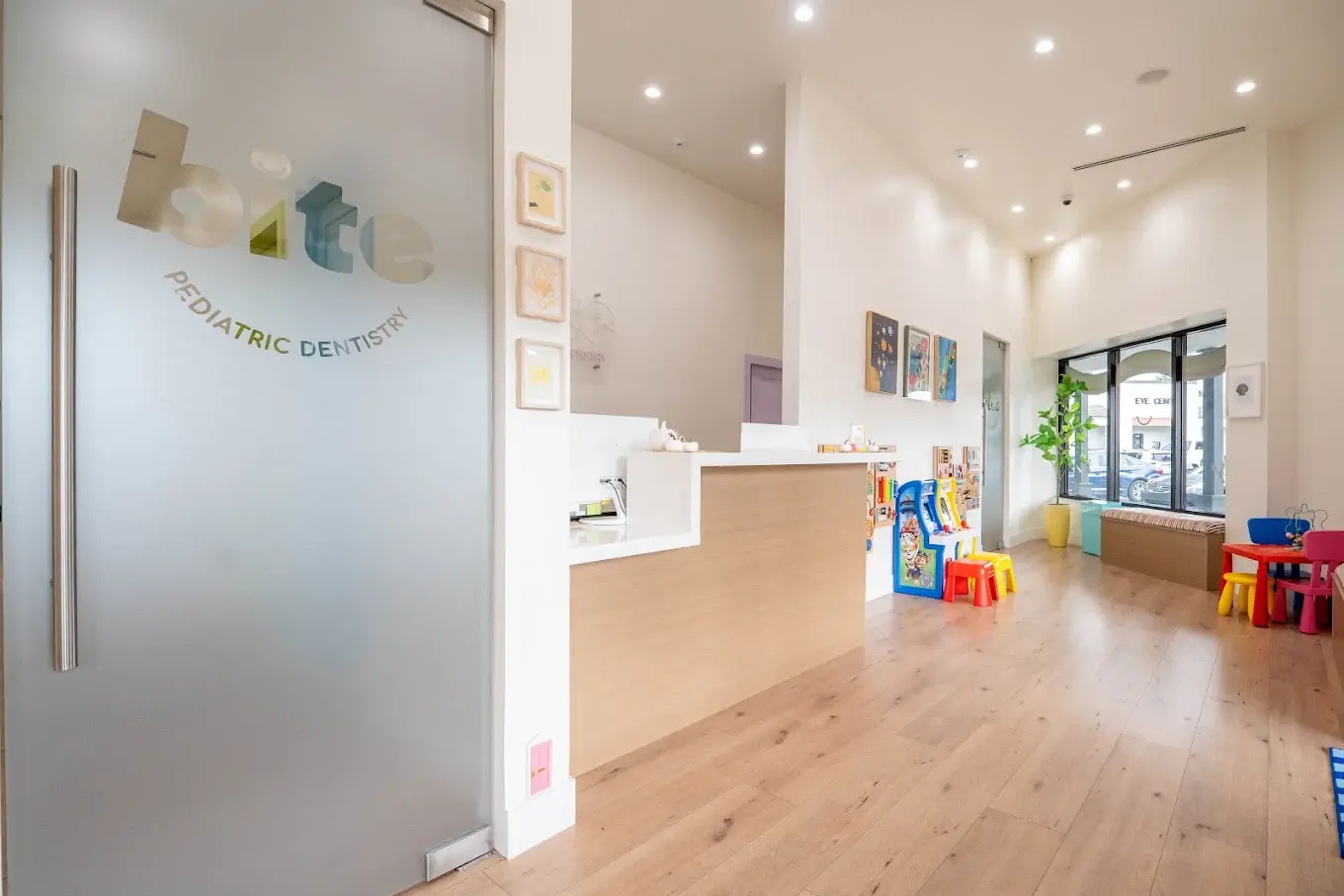
At Bite Pediatric Dentistry, Dr. Garcia helps babies and young children become familiar with dental visits through calm, age-appropriate care. He also guides parents on brushing, food and drink habits, teething, and future checkups. The child-friendly team keeps questions welcome and makes the first appointment clear, comfortable, useful, and positive.
Yes. A baby can visit once the first tooth appears. The dentist can complete a gentle check, guide parents on brushing and feeding habits, and help the child become familiar with the office before pain or a cavity develops.
Call a pediatric dentist near the first birthday even if no teeth are visible. Tooth timing varies, but the dentist can review development, answer feeding and brushing questions, and advise whether to schedule now or wait longer.
X-rays are not automatic at a baby’s first dental visit. The dentist considers age, visible teeth, injuries, and concerns that cannot be checked by looking. Many first appointments focus on a gentle exam and parent guidance.
Crying, turning away, or holding tightly to a parent is common during a new visit. It does not mean the appointment failed. Stay calm, avoid scolding, and follow the dental team’s guidance so the experience remains positive.
Either can provide care, but ask whether the dentist regularly sees babies and young children. A pediatric dental office is built around children’s comfort, ages, and behavior, which can make the first visit easier for everyone.
.avif)
Dr. G is a dedicated pediatric dentist committed to creating a safe, fun, and personalized dental home for every child. Drawing on advanced training and a gentle approach, Dr. G provides expert care with a focus on education and prevention. He is passionate about helping families build foundations for lifelong healthy smiles while ensuring children feel comfortable and confident.
.svg)
.svg)
.svg)

.svg)
.svg)
