.svg)

.svg)
.svg)

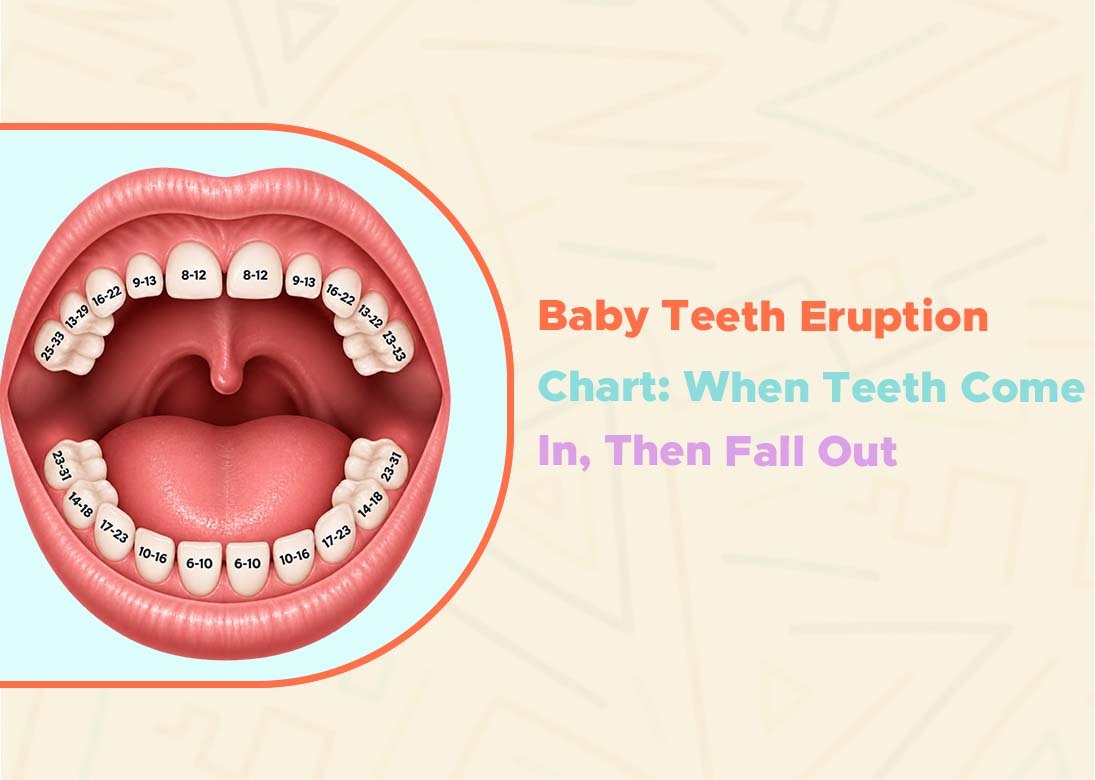
Your baby’s first tooth may appear sooner or later than expected. This baby teeth eruption chart shows when each tooth usually comes in, falls out, and is replaced by a permanent tooth.
Most babies get their first tooth near 6 months, have all 20 by about age 3, and begin losing them around age 6. Treat these ages as a guide. The American Dental Association baby teeth chart also shows that timing varies.
This baby teeth chart uses simple names for quick reference.
These are normal age ranges rather than fixed deadlines. Children usually have 10 top baby teeth and 10 bottom baby teeth by around age 3.
A child may be several months ahead of or behind. Focus on overall progress. Dr. Garcia helps parents compare the pattern with the chart and checks whether new teeth have enough room.
The bottom front teeth usually appear first, followed by the top front teeth. Next come the side front teeth, first back teeth, pointed teeth, and second back teeth.
Teeth often arrive in pairs, but one may appear weeks before its match. When parents ask, “When do baby teeth come in?” a range is more helpful than one exact age.
A changed baby teeth order is not automatically a problem. Keep brushing and mention unusual timing at the next visit.
When do kids lose baby teeth? Most children notice their first loose tooth between ages 5 and 7. The bottom front teeth usually fall out first, followed by the top front teeth.
The side front teeth usually go next. Pointed teeth and back teeth often remain until ages 9 to 12. Baby teeth commonly fall out in roughly the same order they came in.
Do not pull a tooth just because it moves. Let your child gently wiggle it with a clean finger or tongue until it releases easily.
The first permanent back teeth often appear near age 6. They come in behind the baby teeth, so no tooth falls out first. Parents may mistake them for extra baby teeth and overlook them while brushing.
These teeth have grooves where food can collect. Preventive dentistry for children can protect them through regular checks, cleanings, and home-care guidance.
From about ages 6 to 12, children commonly have both sets together. Permanent teeth may look larger or slightly darker than nearby baby teeth.
A chart shows averages, not rules. Some babies get a tooth at 4 months, while others get one after their first birthday. Children whose baby teeth arrive later may also begin losing them later.
Small timing differences, uneven pairs, and a slightly changed order are often normal. Ask for a check when no teeth have appeared by around 18 months, a tooth falls out much earlier than expected, or several teeth look blocked.
A dental visit can review the full pattern and show whether a difference simply needs watching.
Contact a dentist if your child has ongoing tooth pain, swelling, trouble eating, heavy bleeding, or a tooth that changes color after an injury. A baby tooth knocked out in a fall should also be checked.
Arrange a visit when a permanent tooth appears behind a baby tooth that remains firm. Dr. Garcia can check whether it is loosening normally or blocking the new tooth.
Early damage for children may be managed through restorative dentistry, helping protect comfort and preserve room for the permanent tooth. Losing a baby tooth too early can allow nearby teeth to move into its space.
Brush as soon as the first tooth appears. Use a soft child-sized brush and a tiny smear of fluoride toothpaste. An adult should help until the child can clean every surface well.
Pay special attention to new permanent back teeth. Brush their chewing surfaces slowly, limit frequent sugary drinks, and offer water between meals.
Schedule the first dental visit by the first birthday, then follow the visit plan recommended for your child.
The baby teeth eruption chart shows the usual order, but your child does not need to match every age exactly. Track when teeth appear and fall out, protect every new permanent tooth, and arrange a check for pain, major delays, early tooth loss, or teeth growing in unusual places.
Bite Pediatric Dentistry helps parents understand every stage of a child’s changing smile. Dr. Garcia checks how baby and permanent teeth are developing, explains timing differences clearly, and guides families toward next steps. Explore our children’s dental services for preventive visits, tooth care, and support shaped around your child’s needs.
Yes. Baby teeth can come in outside the usual baby teeth order, and a matching pair may appear weeks apart. Keep brushing every visible tooth and ask a dentist if several teeth seem blocked, painful, or far outside the expected age range.
Not always. Some children lose their first baby tooth later than classmates, especially if their teeth also came in late. A dental check can confirm that permanent teeth are developing and that no baby tooth is blocking their path.
A permanent tooth can appear behind a loose baby tooth, especially along the lower front row. Encourage gentle wiggling, but do not force it. Arrange a check if the baby tooth stays firm, causes pain, or blocks the new tooth.
A permanent tooth may appear within weeks, but several months can still be normal. Timing depends on the tooth and available space. Ask a dentist if the gap remains empty for a long time, looks blocked, or follows an injury.
Usually, let the loose baby tooth fall out naturally. Your child can gently wiggle it with a clean finger or tongue. Do not twist or pull a tooth that still hurts, bleeds heavily, or feels firmly attached on one side.
.avif)
Dr. G is a dedicated pediatric dentist committed to creating a safe, fun, and personalized dental home for every child. Drawing on advanced training and a gentle approach, Dr. G provides expert care with a focus on education and prevention. He is passionate about helping families build foundations for lifelong healthy smiles while ensuring children feel comfortable and confident.
Learn when baby teeth usually come in, which teeth appear first, and when children lose them as their permanent smiles develop.
Read More
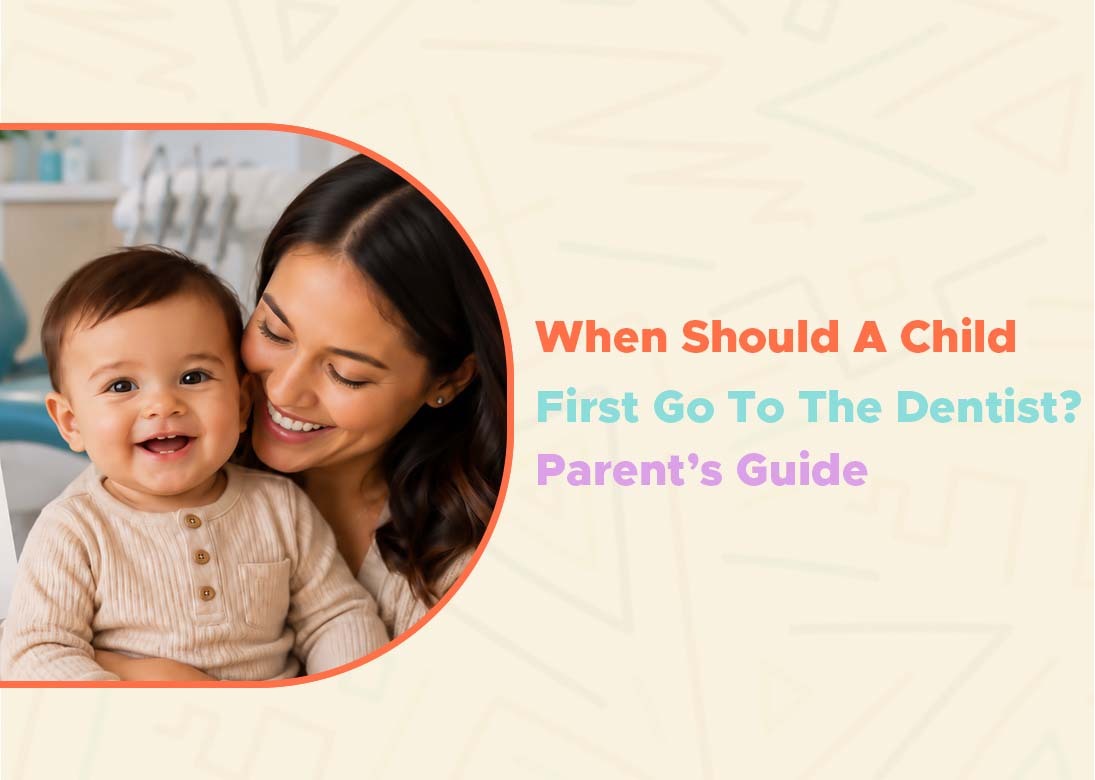
A simple guide for parents on timing your child’s first dental appointment and preparing them for a positive experience.
Read More
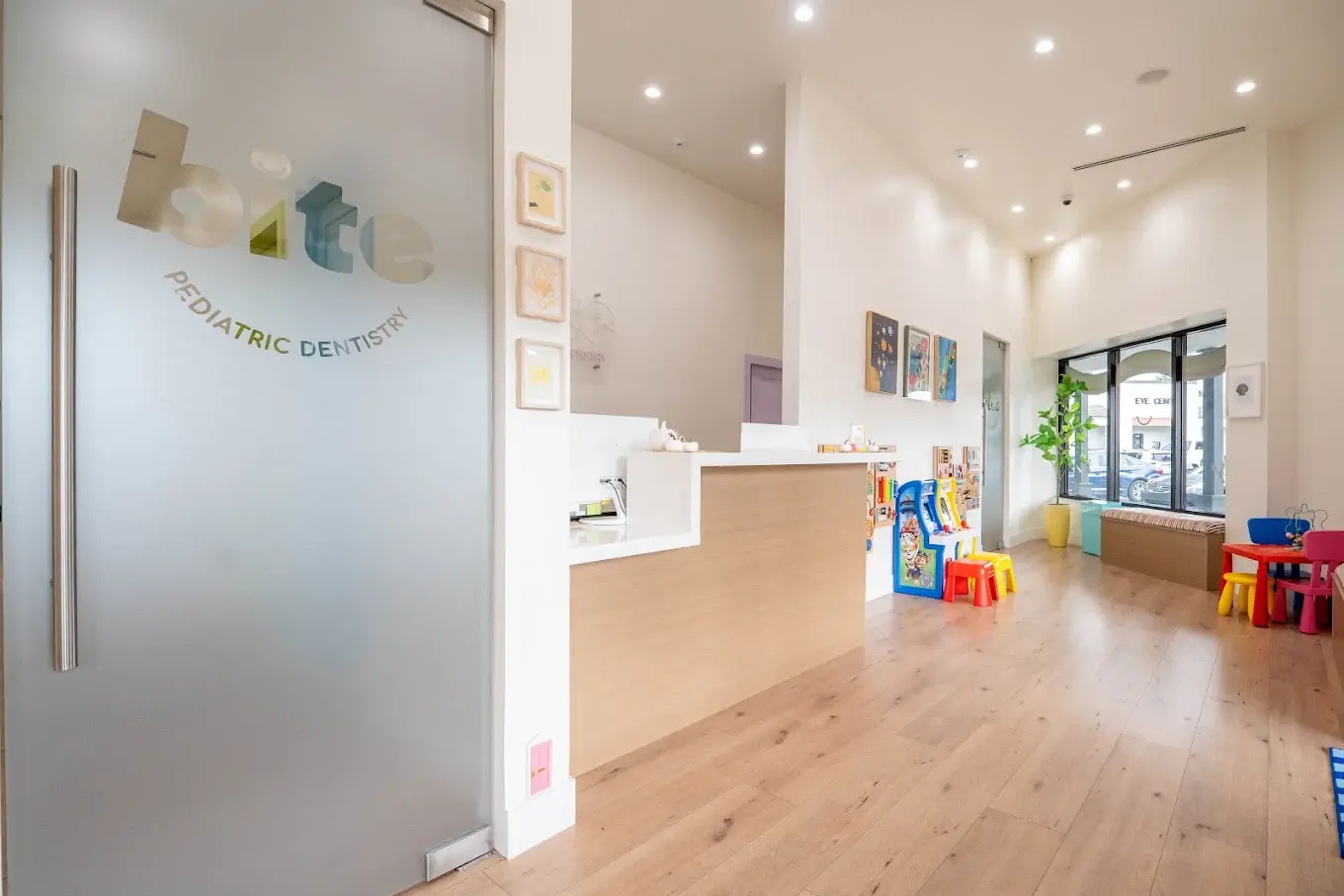
At Bite Pediatric Dentistry, we provide specialized dental care designed around the unique needs of infants, children, and teenagers in a welcoming environment.
Read More
.svg)
.svg)
.svg)

.svg)
.svg)
